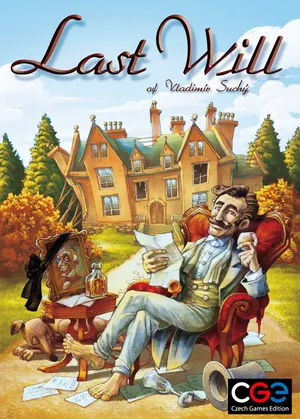
館藏編號 251
叔叔的遺囑
Last Will
- 人數
- 2–512345678+推薦 2–5 人(最佳 4)
- 時間
- 45–75分鐘
- 重度
- 2.7/5中
- BGG 評分
- BGG 評分7.2/1011,045 票
- 年齡
- 14+社群建議 12+
- 年份
- 2011Vladimír Suchý
比誰先把繼承來的財產花光的逆向理財工人擺放
學習曲線
計畫選擇加卡牌圖示,要示範一輪才講得明白
圖示是新手最大門檻,第一局會反覆問這張怎麼用
賣掉資產的時機幾局後才抓得準,太早清空會卡住
AI 整理
有錢的叔叔留下一份遺囑:最懂得享受金錢的姪子才配繼承全部財產。於是目標整個反過來——七回合之內,先把手上的錢花光的人贏。每回合先挑一張「計畫」,它同時決定你這輪抽幾張牌、有幾個跑腿小弟、有幾個行動,以及行動順位;接著派跑腿小弟去公告板搶牌,再用行動打出宴會、房產、隨從與各種開銷,想盡辦法把錢燒掉。
真正好玩的地方是所有經濟直覺都被翻了過來。房產會折舊,所以買下昂貴的老房子、順手把市場行情壓低、再賤價脫手才是漂亮的操作;隨從可以掛在活動上讓花費加倍——帶馬去餐廳、帶女伴上遊艇這種荒謬畫面,就是這款的樂趣所在。難的是節奏:賣東西會讓現金回到手上,太早清空資產又失去繼續花錢的管道,時機沒抓好就會卡在最後那幾塊錢過不去。
它比電力公司輕,比璀璨寶石重;工人擺放的份量不大,重心其實在手牌組合與時機判斷。題材新鮮歸新鮮,骨子裡仍是紮實的歐式資源運算。
受夠了正經歐式主題的人,這個前提本身就夠好笑,還很好解釋。喜歡建構引擎但不想坐三小時的人,一小時左右就能跑完一套完整的花錢機器。四人固定團,這是它最平衡的人數。
開玩前注意:BGG 玩家最推四人,二到五人都可行,但五人的等待時間會明顯拉長,有玩家特別提醒這點。時間 45 到 75 分鐘,盒上標十四歲以上,BGG 玩家投十二歲。語言依賴屬最低等級、資訊全靠圖示,也有中文版;不過那套圖示正是新手最大的門檻,教學時務必留時間帶過一輪。互動偏少,主要是搶公告板上的牌,喜歡互相下絆的人要有心理準備。另有擴充《叔叔的遺囑:快炒了我》可以加。
內容由 AI 依公開資料整理,可能有誤,僅供挑選參考。
玩家怎麼說
共識是題材新鮮、機制與主題契合度高。「偶爾會冒出一款帶著全新點子的遊戲,這就是其中之一,因為玩家得摧毀自己所有的資產與金錢,這會把腦袋整個扭過來」是相當有代表性的一段;也有人說它像是把童年的花錢遊戲拿去做了歐式化處理,設計乾淨、機制聰明。有玩家把「連帶馬去餐廳都可以」這種畫面感當成推薦理由。
保留意見有三塊。有玩家指出互動偏少,並猜想五人局的等待會很難熬。卡牌圖示是新手門檻,有人坦言自己教不好,也有人因為規則講不清楚而始終沒能開桌。還有人覺得為了這個笑點,複雜度稍微高了一點,玩過幾次後就沒有續航力。
想找一款一小時、主題有梗又不失算計的中量歐式,它很值得試;追求高互動或希望教學輕鬆的人要再想想。
規格明細
- 語言
- 繁體中文
- 文字用量
- 幾乎沒有文字
- 中文化狀態
- 中文版
- 類型
- 主遊戲
- 年齡
- 14 歲以上(社群建議 12+)
外部資源
相關作品
BGG 原文介紹(英文)
In his last will, your rich uncle stated that all of his millions will go to the nephew who can enjoy money the most. How to find out which nephew should be rich? You will each be given a large amount of money and whoever can spend it first will be the rightful heir. Visit the most exclusive theatres or eat in the most expensive restaurants. Buy old properties for the price of new ones and sell them as ruins. Host a huge party in your mansion or on your private boat. Spend like your life would depend on it. Spend to become rich! If you're the first to run through the money on hand, you'll receive the rest of his inheritance – oh, and win the game. In Last Will, each player starts with a certain amount of money, an individual player board, two errand boys and two cards in some combination of properties and helpers. At the start of each round, lay out cards from the appropriate decks on the offering boards; the four regular decks are properties, companions, events, helpers and expenses, with special cards forming a deck of their own. The particular mix of cards varies by round and by the number of players. Each player then chooses a plan for the round, with each plan indicating the number of cards the player draws (drawn immediately from the four regular decks in any combination), how many errand boys he can use later (one or two), the number of actions available to him that round, and his spot in the playing order that round. In the playing order for that round, players then take turns choosing an action with their errand boy(s), with those actions being: Take a card on display and add it to your hand. Draw a card from any regular deck – This can be chosen only once by each player. Visit the opera and spend $2. Adjust the value modifiers in the property market. Take a player board extension, thereby giving you room to play more cards. Players then take actions in the playing order for that round, with each player having as many actions as indicated on his plan. Actions let you play one-time events (which have a cost, possibly variable); helpers and recurring expenses (which are placed on your individual player board); and properties (which cost money and may depreciate over time). You can often play companions with events or recurring expenses – of course you should bring a date to the opera or a horse on your yacht! – to increase their cost. You can also use actions to activate cards on your player board, possibly with one or more companions and always with the goal of spending money. Helpers and special cards can provide you with unique powers to further boost your profligacy. At the end of each round, you must discard down to two cards in hand, and properties that can depreciate do so; this is good as a player cannot go bankrupt if he owns properties, and the only way to get rid of properties is to sell them, which regretably puts money back in your hands unless the depreciation was intense or you manipulate the market. If a player has no money and no properties, he declares bankruptcy and the game ends at the conclusion of that round; otherwise the game ends after seven rounds. The player who has the least money (or even who is most in debt) wins.