館藏編號 576
烏邦果
Ubongo
- 人數
- 1–412345678+推薦 2–4 人(最佳 4)
- 時間
- 25分鐘
- 重度
- 1.5/5輕
- BGG 評分
- BGG 評分6.7/1010,588 票
- 年齡
- 8+社群建議 6+
- 年份
- 2003Grzegorz Rejchtman
在沙漏跑完前搶著把幾何塊拼成指定圖形,拼得快就先挑寶石
學習曲線
拼出圖形、比誰快、拿寶石,兩三分鐘就講完
拿到題目卡就知道要做什麼,第一局完全不卡
拼圖速度靠練,寶石顏色的取捨很快就摸熟
AI 整理
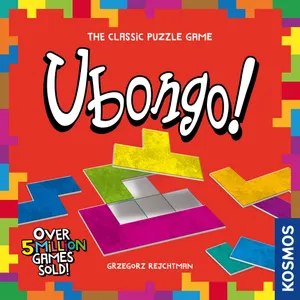
每個人拿到一張題目卡,上面畫著一個由方格組成的形狀,擲骰決定這一輪可以用哪幾塊幾何塊。沙漏一翻,所有人同時開始把手上的塊拼進去,填滿就大喊完成。最先拼出來的人能移動最多格、拿到最理想位置的寶石,第二、第三名依序遞減。九輪結束後,同色寶石收最多的人獲勝。題目卡一面是三塊的簡單版,另一面是四塊的難版,可以依同桌程度切換。
它的核心其實就是俄羅斯方塊或七巧板那種空間感,但加上了沙漏與同時進行的壓力,整桌會突然安靜下來、只剩翻塊的聲音,然後有人大叫。真正讓它不只是純拼圖的是後面那一段:名次決定你能移動多遠,而移動決定你拿得到哪個顏色的寶石,所以最快不一定等於最有利,你還得盯著自己缺什麼顏色、順便擋一下別人。
重量比卡卡頌更輕,節奏也更即時,和多數需要輪流思考的入門遊戲不同,它幾乎沒有等待時間——所有人都同時在動腦。也因為靠的是空間直覺而不是規則理解,年紀小的玩家有時候反而贏得比大人漂亮。
家裡有小孩、想找全家能一起玩的遊戲,規則簡單、節奏快,小孩很吃這一套。完全沒接觸過桌遊的人,五分鐘內就能上手並樂在其中。需要暖場或收尾的場合,二十五分鐘一局,隨時能插進行程裡。
開玩前注意:二到四人推薦,BGG 上的投票認為四人最好,人越多搶名次的緊張感越足;也有單人玩法可以純粹當拼圖練習。單局約二十五分鐘,年齡方面,盒標八歲以上,BGG 上的投票覺得六歲的孩子就能參與。完全不需要閱讀文字,任何語言的版本都能直接玩,而且有中文版。唯一要留意的是空間直覺的個人差異相當大,若同桌實力落差太懸殊,建議讓強的人固定用四塊的難面來平衡。
內容由 AI 依公開資料整理,可能有誤,僅供挑選參考。
玩家怎麼說
有玩家直接說「小孩超愛這款俄羅斯方塊」,也有人把它當成帶新手入門的利器:快節奏的即時拼圖,大人小孩同桌都吃得開;還有人說喜歡七巧板的人會很吃這一套,或把它列為自己最愛的拼圖遊戲。也有人特別指出,搶名次之後怎麼移動、蒐集哪個顏色的寶石,讓它比單純的拼圖多了一層策略。
保留意見不多:有玩家坦言自己從小玩俄羅斯方塊,拼起來明顯佔便宜,同桌的空間感差距會直接反映在勝負上;它本質上仍偏向謎題,對不吃限時拼圖這一味的人吸引力有限。
家裡有喜歡拼圖的人,這款幾乎不會失手;追求深度策略與玩家互動的,就會覺得單薄。
規格明細
- 語言
- 繁體中文
- 文字用量
- 幾乎沒有文字
- 中文化狀態
- 中文版
- 類型
- 主遊戲
- 年齡
- 8 歲以上(社群建議 6+)
外部資源
BGG 原文介紹(英文)
In Ubongo, players compete to solve individual puzzles as quickly as they can to get first crack at the gems on hand for the taking. Original edition: The game board consists of six rows, with twelve gems (of various colors) placed in these rows. At the start of play, each player places their pawn in front of one of those rows. Each player also takes twelve polyominoes — that is, pieces consisting of 2-5 squares in some configuration; players use these pieces each round to try to recreate shapes. At the start of a round, each player receives a puzzle card that depicts a shape created by some number of squares; one side of this card depicts six rows of 3 pieces, the other side depicts six rows of 4 pieces, for a more difficult puzzle. When everyone is ready, someone rolls a die to determine which row of pieces each player can use to recreate the shape on their individual card. The race is timed by a sand timer, and the outcome of this race determines the action on the main playing board. Whoever first solves their puzzle in time gets to move their pawn up to three rows left or right, with the second player to finish moving two rows and the third player only one row. Players then collect two gems from the front of the row where their pawn is located, which means that the more rows you can move, the more control you have over which color gems you can collect. After collecting gems, each player receives a new puzzle card, and a new round begins. After nine rounds, the game ends and whoever has collected the most gems in a single color wins! If players tie, then those players compare who has the most gems in a second color, and so on. 2015 edition: The puzzle-part of the game remains the same, but the scoring track and system has been greatly changed, to be the same as in Ubongo Extreme. There are no pawns anymore, but instead the winner takes a 3-point gem plus a random gem, the second-place player takes a 1-point gem plus a random gem, and others who finish within time take just a random gem. Whoever scores the most gem-points after nine rounds wins the game.