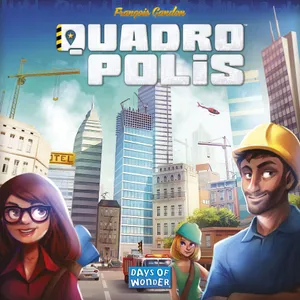
館藏編號 358
方格都市
Quadropolis
- 人數
- 2–412345678+推薦 2–4 人(最佳 4)
- 時間
- 30–60分鐘
- 重度
- 2.2/5中
- BGG 評分
- BGG 評分7.2/1013,580 票
- 年齡
- 8+
- 年份
- 2016François Gandon
用編號建築師從共用市集搶格子,拼出最會賺分的四乘四城市
學習曲線
建築師編號同時決定拿哪格與放哪排,示範一次就懂
規則直覺,只是六種建築的計分要邊玩邊查
何時該搶、何時該封鎖別人,幾局後才順手
AI 整理
四個回合,桌子中央攤開一片 5x5 的建築市集。玩家輪流把編號 1 到 4 的建築師放到某一行或某一列的外側,從那個方向數進去第幾格就拿第幾格的圖板,再放進自己 4x4 城市板上對應編號的行列。四回合結束後,住宅、商店、公共設施、公園、港口、工廠六種建築各自依規則結算,分數最高的人贏。
設計最漂亮的地方就是那個數字:它同時決定「你拿得到什麼」與「你只能放在哪」,一個選擇綁住兩件事,想要的圖板往往剛好落在你城市裡最不該放的那一排。更狠的是被拿走的位置會留下標記,封鎖同一行與同一列,於是每次取牌都在順手替其他人關門,人多時整片市集會被鎖得只剩幾個難堪的選項。
重量介於卡卡頌與展翅翱翔之間,是很標準的家庭中量級。城市建造的手感偏拼圖,但和那些各玩各的鋪磚遊戲相比互動明顯強得多——你選的每一步都直接影響下家。
想找可以帶全家一起玩的城市建造,八歲以上就能參與,畫面也討喜。喜歡空間拼放又想要有點壞心眼的人,封鎖對手的空間非常爽。追求深度策略的重策玩家可能覺得不夠,四回合的長度不足以鋪很長的計畫。
開玩前注意:四人最佳,二到四人都在推薦範圍;人少時封鎖的張力會明顯下降,四人才是這套機制真正發揮的樣子。時間 30 到 60 分鐘,八歲以上就能參與,收放都很快。板面完全不需要讀字,也有中文版,語言毫無門檻。唯一容易踩的坑是建築必須配上居民或能源才會計分,新手第一局常常蓋了一堆卻算不到分,開玩前先把計分規則放在桌上會順很多。
內容由 AI 依公開資料整理,可能有誤,僅供挑選參考。
玩家怎麼說
不少評論肯定它「看起來簡單、玩起來比想像中緊」。有玩家特別喜歡建築師編號同時決定取牌與放置位置的設計,配上都市規劃員封鎖行列的規則,讓一款外表溫和的城市建造玩出相當兇狠的味道;也有人提到組件與收納做得非常好,三人以上時決策的緊繃感更明顯。
保留意見主要有兩種。一是主題偏薄,有玩家讀完規則就覺得那只是包了城市外皮的抽象遊戲;二是耐玩度,有玩過幾次的人認為缺少讓人一玩再玩的刺激,有人乾脆換成同類型的其他城市建造作品。
如果想找一款規則好教、三四十分鐘能結束、又不是各玩各的家庭遊戲,這款很稱職;若你要的是能鑽很久的深度,它大概撐不了太多局。
規格明細
- 語言
- 繁體中文
- 文字用量
- 幾乎沒有文字
- 中文化狀態
- 中文版
- 類型
- 主遊戲
- 年齡
- 8 歲以上
外部資源
BGG 原文介紹(英文)
Each player builds their own metropolis in Quadropolis (first announced as City Mania), but they're competing with one another for the shops, parks, public services and other structures to be placed in them. The game lasts four rounds, and in each round players first lay out tiles for the appropriate round at random on a 5x5 grid. Each player has four architects numbered 1-4 and on a turn, a player places an architect next to a row or column in the grid, claims the tile that's as far in as the number of the architect placed (e.g., the fourth tile in for architect #4), places that tile in the appropriately numbered row or column on the player's 4x4 city board, then claims any resources associated with the tile (inhabitants or energy). When a player takes a tile, a figure is placed in this now-empty space and the next player cannot place an architect in the same row or column where this tile was located. In addition, you can't place one architect on top of another, so each placement cuts off play options for you and everyone else later in the round. After all players have placed all four architects, the round ends, all remaining tiles are removed, and the tiles for the next round laid out. After four rounds, the game ends. Players can move the inhabitants and energy among their tiles at any point during the game to see how to maximize their score. At game end, they then score for each of the six types of buildings depending on how well they build their city — as long as they have activated the buildings with inhabitants or energy as required: Residential buildings score depending on their height Shops score depending on how many customers they have Public services score depending on the number of districts in your city that have them Parks score depending on the number of residential buildings next to them Harbors score based on the longest row or column of activated harbors in the city Factories score based on the number of adjacent shops and harbors Some buildings are worth victory points (VPs) on their own, and once players sum these values with what they've scored for each type of building in their city, whoever has the highest score wins.