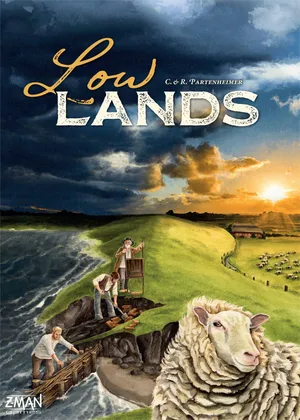
館藏編號 265
低地
Lowlands
- 人數
- 2–412345678+推薦 2–4 人(最佳 3)
- 時間
- 50–100分鐘
- 重度
- 3.1/5中
- BGG 評分
- BGG 評分7.4/103,351 票
- 年齡
- 12+社群建議 14+
- 年份
- 2018Claudia Partenheimer・Ralf Partenheimer
一邊養羊一邊被迫合力築堤的半合作農場工人放置
學習曲線
農場動作不難,難在把堤防與潮汐的獎懲講清楚
第一局常低估水患,回頭才發現堤防投資不夠
何時該顧自己、何時該補堤,要幾局才拿捏得準
AI 整理
北海邊的低地,土地貧瘠、海水隨時要漫上來。你在自己的農場圖板上開墾牧地、養羊、蓋設施,把一塊荒地慢慢變成能賺錢的產業。每輪把不同強度的農夫派去做事,收資源、鋪牧草地、放建築、賣羊換分數。局勢每隔一段時間就會漲潮一次,海水來的時候堤防夠高大家平安,堤防不夠就有人要吃虧。
最特別的就是那條堤防。它是所有人共用的,但派去築堤的農夫就沒辦法回家顧羊,於是每一輪都在問同一個問題:要不要當那個出錢出力的人?築堤本身有分數與保險效果,可是花的力氣別人也一起受惠,最好的位置永遠是「別人築、我養羊」。這種半合作的張力讓它跟一般各玩各的農場遊戲很不一樣,桌上常常出現互相試探與心照不宣的對峙,也可能因此出現搭便車與造王的狀況。
重量比卡卡頌重上一大截,但沒有農家樂那麼緊繃、那麼會餓死人;它常被拿來跟農家樂系譜的農場歐式相提並論,有玩家說它規則比想像中乾淨、腦力運轉卻很飽。和典型的工人放置相比,它把「搶位置」的壓力換成了「要不要為公共建設出力」的壓力。
喜歡農場歐式又想換點新意的人:熟悉的開墾與養殖節奏,但多了一個沒看過的公共風險層。吃半合作張力的人:既不是純合作也不是純對抗,勾心鬥角的甜味剛好。願意花時間讀規則的老手:它的深度需要幾局才吃得出來,不適合當臨時抽出來的墊檔。
開玩前注意:三人是甜蜜點,四人也行但等待時間拉長;兩人局有玩家覺得堤防的公共壓力被稀釋,張力打折。實際時間 50 到 100 分鐘,第一局含教學要抓滿。文字量不多,看懂圖示後幾乎不用查,但目前沒有中文版、也還沒自製中文化,桌上得備一份對照表。年齡標 12 歲、社群建議 14 歲,主要卡在耐性而不是規則。桌面要留出每人一塊農場圖板加上共用堤防的空間,桌子太小會很擠。
內容由 AI 依公開資料整理,可能有誤,僅供挑選參考。
規格明細
- 語言
- 其他
- 文字用量
- 少量文字,可背或小抄
- 中文化狀態
- 未中文化
- 類型
- 主遊戲
- 年齡
- 12 歲以上(社群建議 14+)
外部資源
BGG 原文介紹(英文)
The low land is a rough area where hard-working folk make a living by the sweat of their brow. Under constant threat of storm and flood, communities here rally together to build dikes that keep the rising water at bay. But every citizen constructing a dike is one fewer citizen tending flocks and maintaining the family farm. The residents here are constantly torn between selflessness and self-interest, and only those who can strike this delicate balance can thrive in this harsh landscape. In Lowlands, you carve your farm out of this unforgiving land, gathering and spending resource cards to transform your farmyard into pastures that allow you to profit from breeding sheep. Adding expansions to your farm will unlock new options and score you victory points, but helping to build the dike that collectively protects all players is also rewarded. No matter what, the tide will rise and, if the dike isn't high enough, it could rush in and sweep away your hard-earned profits. Will you sacrifice your own farm for the good of the community, or will you pursue your own agenda? The choice is yours. Even without the poor weather, life on a farm is one of constant work where you find yourself tending flocks of sheep, extending their pastures, and looking for the right moment to sell them for a profit. To complete all these tasks, Lowlands gives you a group of farmers that you can assign to various tasks around your farm. To get the most out of them, you must think strategically, deciding which actions you want to take and the best time to take them. Once they've been assigned, your farmers help you build a bustling farm where there was once scrubby bushes, trees, and lakes. You begin the game with only two sheep and a small pasture, but your farmyard is rife with possibilities, its many empty spaces inviting you to customize your farm as you see fit. While you could simply focus on creating more area for your sheep to roam, the game also provides plenty of options for customizing your farm with various buildings and features. Not only are these tiles worth victory points at the end of the game, they also make your farm more efficient and more profitable. You might add a feeding trough to your farm, for example, to immediately earn another sheep and the ability to house two sheep per pasture space instead of just one. Or you could construct a lake cabin on your property to get away from it all for a bit. While this tile doesn't give you any special abilities, it increases the value in victory points of the farmyard spaces immediately adjacent to it. Ultimately, you are free to pursue whatever strategy you see fit, building a farm wholly your own. On top of the challenges of building a successful farm, of course, you also have to deal with the tempestuous weather that comes with living on the wave-battered coast of the North Sea. Here, the tides always seem to rise a little higher, threatening to take a dent out of your profits by sweeping away some of your flock. To ensure that this doesn't happen, you always have the opportunity to send your farmers to contribute to the dike instead of working on your farm. When you do, you also commit resources to creating dike elements that are added to the board as a buffer against the rising waters. Add enough of these pieces and you might prevent disaster for everyone. The tide turns repeatedly, bringing with it new flood pieces. If there are enough dike elements in place to hold back the rising waters, players' farms are spared. If the dike breaks, however, you could be forced to take dike breach tokens that have adverse effects at the end of the game. While lending a hand with the dike at the expense of your own farm is certainly a nice gesture that keeps everyone safe from the floodwaters, it has rewards of its own. For each resource you contribute to the dike, you advance one step up the dike track. Not only does advancing far enough on this track grant victory points, it also amplifies your reward if the dike holds and lessens the blow when it breaks. It is in your best interest, then, to keep pace with other players on the dike in order to protect your investments back home one the farm. —description from the publisher