館藏編號 163
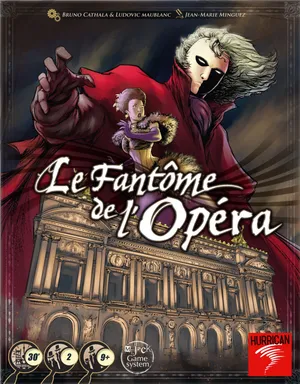
歌劇魅影
Le Fantôme de l'Opéra
- 人數
- 212345678+推薦 2 人
- 時間
- 30分鐘
- 重度
- 2.2/5中
- BGG 評分
- BGG 評分7.0/101,159 票
- 年齡
- 9+社群建議 8+
- 年份
- 2013Bruno Cathala・Ludovic Maublanc
一人躲、一人抓,在歌劇院裡靠明暗與人數推理出魅影的身分
學習曲線
移動格數看同房人數,八個角色能力邊玩邊講
「亮房清誰、暗房清誰」的判定第一局要多翻幾次
兩邊都要學會餵假情報,三五局後才玩得刁
AI 整理
巴黎歌劇院裡有八名嫌疑人,分散在十個房間中,其中一位就是想把首席女伶卡洛塔逼走的魅影。一位玩家扮演魅影,身分只有自己知道;另一位是調查員,要在卡洛塔逃離歌劇院之前指認出他是誰。兩人輪流移動這八個角色——注意,是兩邊都在動同一批人——每回合結束時依照魅影有沒有搗亂,把一整批角色排除嫌疑,線索就是這樣一層層刷掉的。
最迷人的是「明與暗」這個判定。魅影只有在獨自一人、或待在停電的房間裡才能搗亂;搗亂了,亮房裡的人全數清白;沒搗亂,落單或處在黑暗中的人全數清白。於是每一手移動都是雙面刃:你把角色聚在一起還是拆散,都同時在替自己遮掩和替對手縮小範圍。角色各有獨門能力,有人能走密道、有人能移動停電區、有人能把周圍的人全吸過來或全趕走,把資訊操作玩得非常細。
重量介於卡卡頌和璀璨寶石之間,是一款規則不多但腦力密度很高的純兩人推理棋。它和更廣為人知的抓犯人棋類同屬一個系統、由同一組設計師操刀,換上歌劇院的皮與新的角色能力;熟悉那套的人幾乎不用重學,反過來說,家裡已經有同系統作品的人,收藏價值就見仁見智。
固定兩人開的組合,這是專為兩人設計的對局,不是多人遊戲硬縮。喜歡推理與資訊博弈的人,雙方共用同一批棋子的設計,讓每一步都在說謊或戳破謊言。想帶小孩玩推理的家庭,建議年齡九歲、玩家投票八歲就可以,規則比想像中親切。
開玩前注意:人數就是純兩人。一局三十分鐘,節奏明快。盒標 9 歲以上,BGG 玩家覺得 8 歲就行。桌面幾乎不需要文字,語言完全不是障礙,買到哪個語版都能直接開。要留意兩點:一是兩邊的體感難度不同,有玩家覺得魅影方比較吃虧,建議用卡洛塔的起始位置來調整平衡,新手先當調查員比較好上手;二是它偏抽象的棋類手感,喜歡故事沉浸的人可能會覺得主題只是外衣。
內容由 AI 依公開資料整理,可能有誤,僅供挑選參考。
玩家怎麼說
多數玩家的共識是這是一款乾淨好玩的兩人推理小品:有人形容它是「推理誰在騷擾女伶的謎題,好玩又有挑戰性,而且很好教給小孩」,也有人說它補上了收藏裡缺的兩人推理位置,因為這份獨特性一直沒被淘汰掉。也有人提到美術與配件是加分項。
保留意見有兩類。一是平衡:有玩家直說「魅影方比較吃虧」,也有人玩了好幾局都沒看魅影贏過。二是它與同系統前作的關係——不只一位玩家直言「就是換了皮的同一款」,已經有前作的人覺得沒必要再收;另外也有人嫌它「太像下棋」,還有人光看就覺得貓捉老鼠的架構太單純。
想挑遊戲的話:家裡還沒有同系統作品、又常兩人開局的話很值得,已經有了就純粹看你喜不喜歡歌劇院這身皮。
規格明細
- 語言
- 英文
- 文字用量
- 幾乎沒有文字
- 中文化狀態
- 語言無關
- 類型
- 主遊戲
- 年齡
- 9 歲以上(社群建議 8+)
外部資源
BGG 原文介紹(英文)
Le Fantôme de l’Opéra is a two-player game based on the Mr. Jack game system – that is, the game is an asymmetric affair in which one player wants to reveal which suspect token on the game board represents the opponent, with both players taking turns moving all of the suspects to alternately reveal and hide information. That said, the game differs in a number of ways from Mr. Jack. In more detail... In Le Fantôme de l’Opéra, eight suspect tokens stand in the ten rooms of the Opéra Garnier. Each suspect has a reason to drive the opera singer La Carlotta away from the production, and at the start of the game one of the suspects is randomly determined to be the true identity of the Phantom player. The other player is the Investigator, and he wants to discover the Phantom's identity; if he does so before La Carlotta flees the Opéra Garnier, then he wins. Otherwise, he loses. (To balance play between newcomers and experienced players La Carlotta's starting position can changed.) At the start of each odd round, eight suspect cards are shuffled and four of them revealed. The Investigator moves one suspect and (likely) uses this suspect's unique ability, then the Phantom moves two of the remaining three suspects, then the Investigator moves the final suspect. The Phantom player then reveals whether he can or cannot cause a disturbance in the Opéra Garnier, thus scaring La Carlotta; he can cause a disturbance only if he's alone or if he's in the room with the blackout token. If he can cause a disturbance, the Investigator clears all suspects sharing a lit room; if not, the Investigator clears all suspects in the dark or on their own. After this, La Carlotta moves one step closer to fleeing for each suspect that hasn't been declared innocent (and an additional step if the Phantom did create a disturbance). For each even round, the remaining four suspect cards are revealed, and the players again move characters and use their special abilities, with the Phantom going first. The game continues until only a single suspect is not innocent or La Carlotta flees France for the safety of Milan. When a character moves, it can move up to as many spaces as the number of characters in the room from which it moves. Most characters can move only through open corridors, but Meg Giry can use secret passageways that connect many of the rooms. The players must use Meg's ability and the other characters' special abilities to hide or reveal information. One character, for example, moves a padlock that blocks one corridor, while another is responsible for the roaming blackout that allows the Phantom to operate in darkness (or at least provide cover for his activity elsewhere). One sweet character can draw everyone from adjacent rooms to her side, while an unpleasant fellow can drive everyone away. Still another reveals (or hides) an alibi card, clearing one suspect (or keeping his true nature unknown). Every character is useful in the right situation. You just have to learn what those situations are...