館藏編號 1036
同房異夢
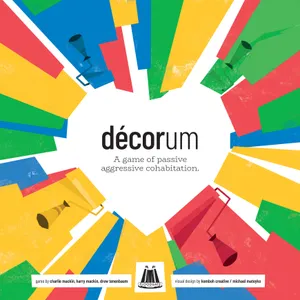
Décorum
- 人數
- 2–412345678+推薦 2–4 人(最佳 2)
- 時間
- 30–45分鐘
- 重度
- 2.0/5中
- BGG 評分
- BGG 評分7.4/102,862 票
- 年齡
- 13+社群建議 14+
- 年份
- 2022Charlie Mackin・Drew Tenenbaum
兩人各握一半裝潢條件、只能靠喜歡討厭互相猜心的合作解謎
學習曲線
擺物件、回一句喜歡或討厭,規則三兩下就講完
要從對方的反應反推他的條件,起步不直覺
每個情境都有新變化,得練出跟固定搭檔的默契
AI 整理
兩到四人合力把一間房子裝潢到所有人都滿意。每人開局拿一張只有自己看得到的條件卡,寫著這間房子該有或不該有什麼,像是「任何房間都不能有檯燈」或「每個房間都要有一件掛飾」。輪到你就在平面圖上放進、移走或搬動代表家具的標記,也可以把房間重新粉刷;動完之後,其他人只能用「喜歡」「討厭」「還行」三選一回應,不准解釋。所有人的條件同時滿足,這一局就結束。
好玩的地方在於,它表面上是一道有明確解法的邏輯謎題,實際上是在讀坐在對面那個人的心。你以為答案已經排好了,對方一伸手把你的燈搬走,還丟一句「討厭」。出版商自己講得很坦白:真正的挑戰不只是解謎,而是處理同伴弄亂你計畫時那股火氣;玩到某個時間點,兩邊都得放掉原本的想法,改看對方在做什麼。妥協不是這裡的道德教訓,是它的機制。
和瘟疫危機那類「全隊一起對抗系統」的合作遊戲很不一樣,這裡沒有敵人,所有阻力都來自你的隊友。重量比卡坦島再輕一點,屬入門偏上,離重策略還很遠,一個情境 30 到 45 分鐘。另一個差別是,多數合作遊戲常出現一個老手指揮全場的老問題,這裡因為沒人握有完整條件、也不准說明理由,那種局面很難發生。
固定的兩人搭檔最吃得到甜頭,情境像連續劇一樣一路推下去,默契會肉眼可見地變好。喜歡純邏輯推理的人會欣賞每題都有明確解答,卡住是自己還沒想通,不是運氣不好。受不了合作遊戲被人代打的人可以放心,訊息封在各自手上,沒有人能替你決定。
開玩前注意:BGG 上的投票最佳人數是 2 人,3 到 4 人也在推薦範圍,但人愈多、要同時滿足的條件愈多,收斂得愈慢。時間 30 到 45 分鐘指的是一個情境。盒標 13 歲以上,BGG 玩家投票覺得 14 歲更合適。語言依賴中等,條件卡上有需要讀懂的敘述,BGG 標註得準備對照表或貼紙;手上這套未中文化,英文閱讀吃力的話得先做翻譯再開。情境共 30 個,有玩家提到數量有限、用完就沒了,也有玩家提到其中只有一部分是兩人情境;想繼續的話有擴充《同房異夢:遷居新夢》。
內容由 AI 依公開資料整理,可能有誤,僅供挑選參考。
規格明細
- 語言
- 繁體中文
- 文字用量
- 中等文字,需要對照表
- 中文化狀態
- 中文版
- 類型
- 主遊戲
- 年齡
- 13 歲以上(社群建議 14+)
外部資源
相關作品
BGG 原文介紹(英文)
Decorum is a cooperative, hidden information game where you and your partner share the same objective: decorate your home in a way that makes you both happy. The problem is, different things make each of you happy and nobody says exactly what they need. Can you find a happy compromise, or is it time to move out?! -Play through 30 unique scenarios, each introducing new twists and challenges. -Keep your conditions a secret, they say how you want the house decorated. -Add, remove, and swap objects or repaint rooms to make the house look just right… for you. -Respond with “Love it”, “Hate it”, or “Fine with it” to work together toward a perfectly decorated home. -There is a solution for each scenario, the trick is figuring it out in time. At its heart, Décorum is a pretty straightforward logic puzzle. There are a small number of ways to arrange the internal pieces that meet all the requirements listed on the player’s rule sheets simultaneously. The twist of Décorum is that it’s also a hidden information game. No player has all of the rules. While playing, the players will have to watch their partner’s moves just as carefully as they’re planning their own. Even more crucially, they’ll have to communicate why they’re making the moves they’re making–using the very limited means we’ve provided them. Décorum might be about solving a puzzle, but it’s really a game about communication and compromise. The real challenge isn’t just solving the problem with the limited information you and your players have; it’s dealing with the frustrations that will inevitably occur when your partner does something that messes up your plan. In order to be successful in Décorum, there will come a point where both players will have to let go of their initial strategy for how they were going to finish the board and start paying attention to what their partner is doing instead. By introducing and providing an incentive to resolve conflict, Décorum mechanically encourages (or even requires) a positive form of compromise. Each player draws a "Scenario" card that lists a set of criteria of what types of décor a room must have or cannot have. For example "No room may contain a lamp" or "Every room must contain a wall hanging". Players keep their criteria secret. The play surface is a board displaying various rooms in a house. Each room has multiple items that can potentially be placed in the room. Players take turns placing, moving, or removing colored tokens on the board, where each token represents an item of home décor. Each token placed may conform with, or violate, the other players' criteria. After each token is placed, other players may state they like the item of décor, as placed, or they do not like the item of décor, as placed. Further discussion or explanation is not allowed. The game ends when all players' criteria are satisfied.